When you stand at the confluence of the East and West Lyn rivers, you are standing at the heart of a story that spans centuries. The Lyn Valley isn’t just a backdrop for a retreat; it is a landscape shaped by Victorian ambition, literary legends, and a spirit of resilience that defines North Devon.
As the new stewards of The Lynmouth Retreat, we’ve been diving into the archives to learn more about the ground we walk on. Here are the stories that make this valley truly unique.
1. “Little Switzerland” and the Romantic Poets
In the early 19th century, the Napoleonic Wars made travel to the European Alps nearly impossible for the British elite. When the Romantic poets—Southey, Coleridge, and Wordsworth—arrived in Lynton and Lynmouth, they were struck by the jagged cliffs and deep wooded gorges.
Robert Southey famously dubbed it “Little Switzerland,” a name that stuck. This transformed the valley from a quiet fishing outpost into a premier destination for those seeking the “Sublime” in nature. If you’ve ever wondered why our architecture feels a bit more “alpine” than your typical English village, you have the 1800s travel ban to thank!
2. The Night of the Louisa (1899)
One of the most incredible feats of human endurance took place right here in January 1899. During a violent storm, a ship called the Forrest Hall was in distress. The Lynmouth lifeboat, the Louisa, couldn’t be launched from the harbor because of the weather.
Instead of giving up, 100 locals and 18 horses towed the lifeboat 13 miles over the steep, rain-soaked moorland of Exmoor to Porlock, where the water was calmer. They hauled a 10-ton boat up a 1-in-4 gradient in total darkness. By dawn, they launched the boat and saved every soul on board.
3. A Pioneering Powerhouse
Lynmouth was actually one of the first places in the UK to have electric street lighting. In 1890, Charles Green utilized the power of the fast-flowing West Lyn river to create a hydroelectric plant. While London was still flickering under gaslight, our little valley was humming with renewable energy—a tradition of sustainability we strive to honor today.
4. The Great Flood of 1952
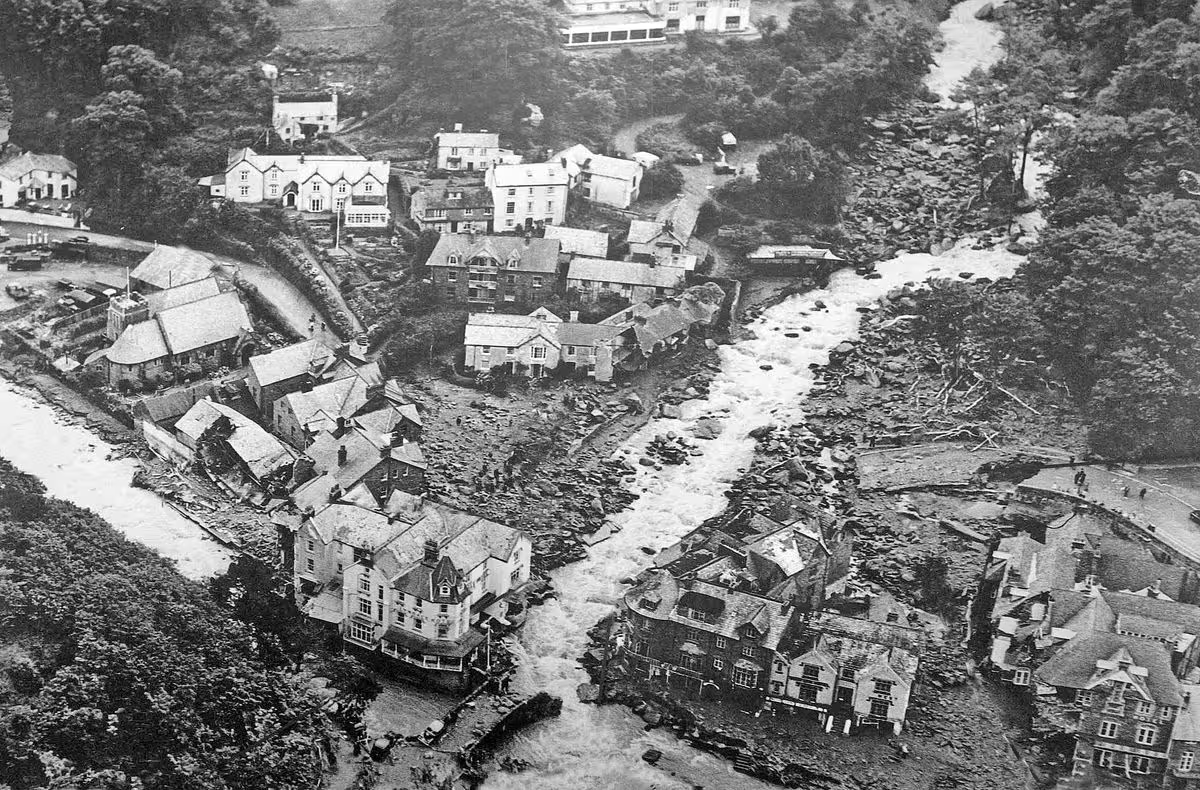
It is impossible to discuss the history of the valley without mentioning the night of August 15, 1952. After an unprecedented tropical downpour on Exmoor, a wall of water and boulders swept down the East and West Lyn rivers.
The flood changed the face of Lynmouth forever. While it was a moment of immense tragedy, the way the village rebuilt—widening the river channels and creating the beautiful, open harbor walls we see today—is a testament to the local strength. The “Mountain & Clay” colors of our landscape are a constant reminder of the earth’s power and its ability to regenerate.
5. The Victorian Engineering Marvel
No history of the valley is complete without the Lynton & Lynmouth Cliff Railway. Opened in 1890, it remains the world’s highest and steepest water-powered railway. It was built to solve a simple problem: how to get heavy goods up the 500-foot cliff from the harbor to the town above. Today, it stands as a reminder that in the Lyn Valley, we don’t just look at obstacles—we build ingenious ways to overcome them.